
Here are all our book reviews, we have marked them with the groups we feel they are most applicable for as well.

The Australian Glen Scrivener opens; “Goldfish don’t see water. Goldfish see what’s in the water, they see what’s refracted through the water, but I assume (yes, assume – I haven’t done the proper investigations) that goldfish don’t see the water itself. And yet there it is. It’s their environment. Universal but invisible. It shapes everything they do and everything they see. But they don’t see it” .
His argument is simple – the same stands for us. As Westerners, we take many of the founding principles of our society for granted. We live in a peculiar culture – utterly different to the classical world of ancient times, different to undemocratic nations, different to theocracies as well. Why? Because our cultural norms are founded on distinctly Christian values.
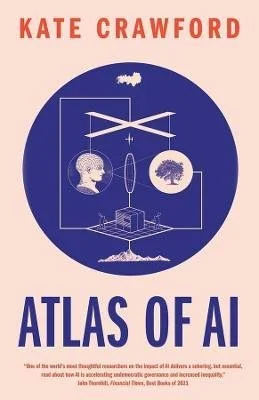
AI is neither artificial nor intelligent, rather, artificial intelligence is both embodied and material, made from natural resources, fuel, human labour, infrastructures, logistics, histories, and classifications. AI systems are not autonomous, rational, or able to discern anything without extensive, computationally intensive training with large datasets or predefined rules and rewards. In fact, artificial intelligence as we know it depends entirely on a much wider set of political and social structures. And due to the capital required to build AI at scale and the ways of seeing that it optimizes AI systems are ultimately designed to serve existing dominant interests. In this sense, artificial intelligence is a registry of power’

Andy Crouch’s “The Tech-Wise Family” was a major inspiration for the family’s section of the TechHuman initiative. We were most interested to see what Amy Crouch (Andy’s daughter) was going to say about her experiences growing up in a ‘Tech-Wise Family’.
Andy began the book by inviting us to “take hold of the life that is truly life”. To do that: to celebrate, to feast, to love then this is invariably best done in community, in relationship with other living human beings. It is only there that we can fully celebrate our triumphs, completely share in our sorrows, and find true encouragement from one another. It is in community and in family that we can be loved, accepted, and known. Digital technology offers a semblance of ‘comfort’ and ‘connection’ on a very grand scale; yet the reality it turns out to be a pale shadow of the real thing.

Esther Meek suggests that our first knowledge as human beings is the knowledge of being loved – in the wombs, at the breast, in the embraces of our mothers. This first knowledge, she suggests, is paradigmatic for all of our knowing. To know follows being known; being known is woven into being loved…this can shape our whole epistemology as scholars – shaping our understanding of knowing as a human being in all of life.

“You don’t have to know everything about every app and device to mentor your children. But you do need to be in the conversation. If you’re not a part of their world, you can’t influence their world.”

Catherine Steiner-Adair is trying to help families turn technology into an ally for closeness, creativity and community. This takes some clear thinking and commitment. “But it [our society] is halfway towards forgetting that children need childhood. Those who insist on remembering shall perform a noble service.” *
The Author recommends that parents ask themselves, “What values do I want my children to end up with as adults, and am I living the lifestyle and teaching the lessons that embody these values?”

Adam Alter is a psychologist and writer, currently based at New York University’s Stern School of Business. His academic research focuses on social psychology, judgment and decision-making, with an interest in the effects that subtle cues in the environment can have on human cognition and behaviour.
‘Irresistible’ is broken into three sections:
1. what is ‘behavioural addiction’?
2. ingredients of behavioural addiction; and
3. some possible solutions.

I looked forward to the release of this book in late 2019. It promised to address similar ground to Shoshana Zuboff’s, “The Age of Surveillance Capitalism”; but being written by a journalist, I hoped it might be more accessible and, as billed in the launch documentation, offer solutions to the evil implied by the title. At the risk of playing my cards too early – the book is more accessible than Zuboff’s, but it offers little in terms of specific solutions to the problems she describes.

This is a rare book: a theology of digital technology written by someone who is both a serious technology practitioner and a professional theologian. Published by IVP Academic, this is quite a serious book. It will be of interest to Technology Professionals interested in Theology and Philosophy; or to Theologians who want to explore the place of Technology in creation, our culture and our daily lives.

Coming soon

If you want to understand why so many smartphone applications seem to be ‘addictive’ – this book explains, with devastating simplicity how it is done. Nir Eyal graduated from Stanford University Business School. Eyal researched what was happening empirically and from that he identified a core pattern that seemed to underpin all ‘successful’ solutions of this type, which he described and called the ‘Hook Model’

When you pick up this little book, with its bright red cover it seems quite innocuous. It’s only just over four hours as an audiobook. I expect that it will provoke strong responses in many readers with its challenging, personal examination of the potential impact of technology on family life, and how you might go about keeping it in its proper place.

Sherry Turkle has an important and influential voice in current debates about interactions between humans and machines. She trained as a psychoanalyst and joined the MIT computer science department in the 1970’s, working with the celebrated computer pioneer Joseph Weizenbaum.

Carl Frey is an economist at Oxford University where he directs the Future of Work programme at the Oxford Martin School. He was the co-author of an influential 2013 paper entitled “The Future of Employment. How susceptible are jobs to computerisation?”. His recent book continues the same theme, analysing the effects of increasing automation on different types of employment, but from a practical and well-informed historical perspective.

Shanahan is Professor of Cognitive Robotics at Imperial College London, and writes with authority and clarity about the possibility of a “singularity” in information technology, a sudden and disruptive increase in AI capability which would have unique and transformative effects on human history.

Tegmark is a MIT physicist who was one of the founders of the Future of Life Institute, dedicated to the study of risks to the future existence of humanity from multiple threats, including super-intelligent AI.
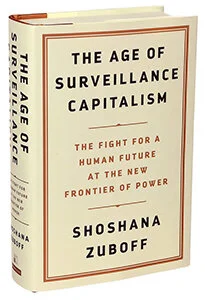
“The Age of Surveillance Capitalism” is an important work: describing the massive, shadowy forces that are driving much of the Digital Revolution in the West. Reading it will cause you to consider whether we are being swept unwittingly into digital people-hives constructed by Big-Tech solely for commercial gain and whether in the process we are inadvertently relinquishing human agency.