
Over the last 2-3 years we have seen the emergence of Large Language Models (LLM) capable of generating text given access to input information. Agentic AI is on the rise automating a wide range of human/machine interactions. In this article I want to address some interactions which historically have been human-to-human but are beginning to become more autonomous machine-to-human interactions. I wonder whether all these applications are justified, helpful or appropriate – and whether we are living up to Jesus’ challenge of loving our neighbour as ourselves when we embrace them
Read More
The purpose of this paper is to consider what degree we should allow technology to mediate the moments that matter in our lives. I am concerned that unthinking adoption risks stripping away aspects of our humanity and may reduce the affected relationships to something less than they were meant to be.
Read More
The Australian Glen Scrivener opens; “Goldfish don’t see water. Goldfish see what’s in the water, they see what’s refracted through the water, but I assume (yes, assume – I haven’t done the proper investigations) that goldfish don’t see the water itself. And yet there it is. It’s their environment. Universal but invisible. It shapes everything they do and everything they see. But they don’t see it” .
His argument is simple – the same stands for us. As Westerners, we take many of the founding principles of our society for granted. We live in a peculiar culture – utterly different to the classical world of ancient times, different to undemocratic nations, different to theocracies as well. Why? Because our cultural norms are founded on distinctly Christian values.
Read More
ChatGPT has been creating quite the buzz ever since its launch in November 2022. Until recently, the massive developments in the world of AI were hidden under the cover of academic institutions or digital frontends of AI powered apps. With the advent of generative AI powered tools like mid journey for image generation or ChatGPT for text generation, the developments in this field have been exposed to the public. The newfound ability of the public to interact with these models using text prompts has dazzled them into an unprecedented realization just how far the field has progressed.
Read More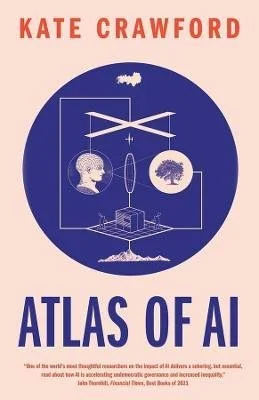
AI is neither artificial nor intelligent, rather, artificial intelligence is both embodied and material, made from natural resources, fuel, human labour, infrastructures, logistics, histories, and classifications. AI systems are not autonomous, rational, or able to discern anything without extensive, computationally intensive training with large datasets or predefined rules and rewards. In fact, artificial intelligence as we know it depends entirely on a much wider set of political and social structures. And due to the capital required to build AI at scale and the ways of seeing that it optimizes AI systems are ultimately designed to serve existing dominant interests. In this sense, artificial intelligence is a registry of power’
Read More
We are a generation living in the midst of AI development, and many of us have likely dreamed of how AI could make our lives easier by carrying out certain tasks and freeing up time for more meaningful pursuits. Sometimes we're surprised by just how far AI has already advanced, such as ChatGPT's ability to write a 900 words article in just 20 seconds. It can make us wonder why we bother writing ourselves and worry about potential typos and grammatical errors.
Read More
“Reality is that which, when you stop believing in it, doesn't go away.” This profound insight comes not from a philosopher but from the celebrated science fiction author, psychotropic drug enthusiast and mystic, Philip K Dick. There is an ultimate primordial difference between reality and falsehood, between truth and counterfeit. Falsehoods, lies, counterfeits, deceptions are invented by human minds. The truth just is - objective, independent of all beliefs and conspiracy theories, unalterable and unavoidable. And yet, in an era in which the black art of spreading disinformation has become ever more sophisticated, how on earth can ordinary people ever distinguish between truth and lies?
Read More
The Robot Will See You Now offers arresting insights into the role of AI in areas such as health care, employment, security, the arts and intimate relationships, and delves deep into cultural and theological issues. With experts considering how AI is perceived - and its impact on how we interact with one another - this enthralling book will benefit Christians who want to understand and prepare for the opportunities and challenges ahead.
Read More
As the Fourth Industrial Revolution ushers into a new era of artificial intelligence (AI) and virtual reality, how should we respond to the societal and ethical dilemmas associated with this new age of transformative scientific power? This research highlights the need for an ethical and globally shared view on how technology affects the economic, social, cultural and spiritual aspects of daily life. An international team have compiled this book, outlining consequences of the Fourth Industrial Revolution across a broad range of issues covering business and work life, for leadership, for media and communication, for churches and for personal and family life.
Read More
Esther Meek suggests that our first knowledge as human beings is the knowledge of being loved – in the wombs, at the breast, in the embraces of our mothers. This first knowledge, she suggests, is paradigmatic for all of our knowing. To know follows being known; being known is woven into being loved…this can shape our whole epistemology as scholars – shaping our understanding of knowing as a human being in all of life.
Read More
The failure of the public examinations grade awards across the UK in 2020 offers a compelling case-study in the risks of large-scale public application of algorithms to decision-making (or recommendation). I believe this demonstrates clearly the need for robust, independent review and certification of algorithms prior to live use – with focus on the impact of recommendations/decisions on individuals who are the subjects of these tools.
Read More
“You don’t have to know everything about every app and device to mentor your children. But you do need to be in the conversation. If you’re not a part of their world, you can’t influence their world.”
Read More
Catherine Steiner-Adair is trying to help families turn technology into an ally for closeness, creativity and community. This takes some clear thinking and commitment. “But it [our society] is halfway towards forgetting that children need childhood. Those who insist on remembering shall perform a noble service.” *
The Author recommends that parents ask themselves, “What values do I want my children to end up with as adults, and am I living the lifestyle and teaching the lessons that embody these values?”

AI and digital technologies are creating particular and unique challenges for regulatory authorities and governments around the world. In particular
The speed of change and unforseen consequences
Concentrations of power, expertise and economic resources
Surveillance capitalism and behaviour modification

On February 17 2020, BBC Panorama Program explored the rise of Amazon and their strategy for growth, driven in part by ‘obsessive data gathering’. This is a powerful example of Surveillance Capitalism, and Shoshana Zuboff, Roger McNamee and Meredith Whittaker all appear on this informative and disturbing documentary.
Read More
Adam Alter is a psychologist and writer, currently based at New York University’s Stern School of Business. His academic research focuses on social psychology, judgment and decision-making, with an interest in the effects that subtle cues in the environment can have on human cognition and behaviour.
‘Irresistible’ is broken into three sections:
1. what is ‘behavioural addiction’?
2. ingredients of behavioural addiction; and
3. some possible solutions.

I looked forward to the release of this book in late 2019. It promised to address similar ground to Shoshana Zuboff’s, “The Age of Surveillance Capitalism”; but being written by a journalist, I hoped it might be more accessible and, as billed in the launch documentation, offer solutions to the evil implied by the title. At the risk of playing my cards too early – the book is more accessible than Zuboff’s, but it offers little in terms of specific solutions to the problems she describes.
Read More
Coming soon
Read More
If you want to understand why so many smartphone applications seem to be ‘addictive’ – this book explains, with devastating simplicity how it is done. Nir Eyal graduated from Stanford University Business School. Eyal researched what was happening empirically and from that he identified a core pattern that seemed to underpin all ‘successful’ solutions of this type, which he described and called the ‘Hook Model’
Read More
Interactions with apparently human-like and ‘emotionally intelligent’ AIs are likely to become commonplace within the next ten years, ranging from entirely disembodied agents like chatbots through to physical humanoid robots. This will lead to new and troubling ethical, personal and legal dilemmas.
Read More